Why you can't just stop.
You don't decide to bite. Most of it happens while your attention is somewhere else.
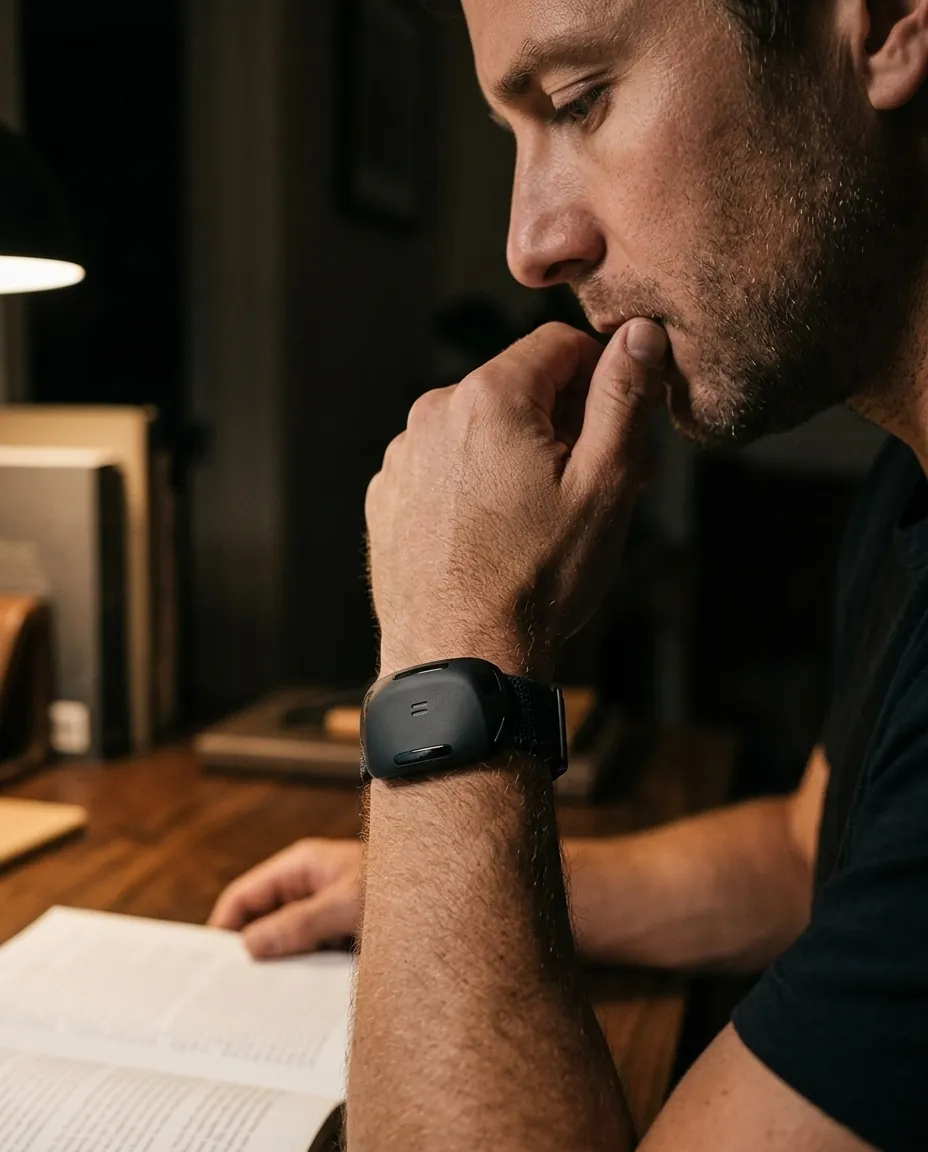
It starts before you know.
You're reading, driving, on a call. A nail is gone before you knew your hand had moved. Hair pulling can work the same way: some people only realize when they find the hair. Skin picking too. Others do it with full attention at a mirror, and plenty of people do both.1,2
Willpower has to be there.
Trying harder works in the moments you notice. The habit lives in the moments you don't. That's why you can mean it completely at breakfast and still find yourself doing it by lunch.
Noticing comes first.
The most studied behavioral method for these habits is habit reversal training.1 Its main parts are simple: learn to notice the habit, learn something else to do with your hands, and get support.
In a small trial of adults who bit their nails, three sessions adding up to two hours grew nails 22% from baseline, against 3% for placebo. Five months later it was 19% against 0%.3
It isn't the whole answer. Long-term gains are harder with this method alone, and slips are expected.1 In an online study where people taught themselves, results were modest, and the people who practiced more did better.4
So we built the noticing.
Habitloop catches the habit as it starts and buzzes your wrist. One buzz. Your hand stops. What you do next is still yours. Over the weeks, you start catching it yourself.
Free 30-day guides: nail biting, hair pulling, skin picking.
Sources
- TLC Foundation for Body-Focused Repetitive Behaviors, Expert Consensus Treatment Guidelines, 2016.
- Phelps and Bethurem, Current Psychiatry 21(1), 2022.
- Twohig, Woods, Marcks and Teng, J Clin Psychiatry 64(1), 2003. 25 adults completed.
- Moritz et al., Behavior Modification, 2022. 113 people, no control group.