A buzz, not a shock.
You don't need punishing. You need a signal at the right moment.
Pain answers the wrong question.
A shock treats the habit as a choice you need to be talked out of. But you weren't there when it started. What's missing is the moment of noticing, and we don't think pain adds anything to that moment.
A shock band still needs you to notice.
Pavlok's own page calls nail biting a "self jolt", where "you will manually press the button."1 If you caught yourself in time to press it, the hard part already happened. The times you didn't catch yourself, nothing happens at all.
What the research tests.
The most studied method for these habits has three main parts: noticing, doing something else with your hands, and support.2 None of them is pain.
We looked for a controlled trial of a shock wristband for nail biting, hair pulling or skin picking and couldn't find one. That doesn't prove it can't help. It means nobody has shown it.
The evidence for vibration is early too: one published case and a 10-person pilot,3 with a randomized trial of a vibrating bracelet for hair pulling registered.4 We'd rather you know that.
Why a buzz is enough.
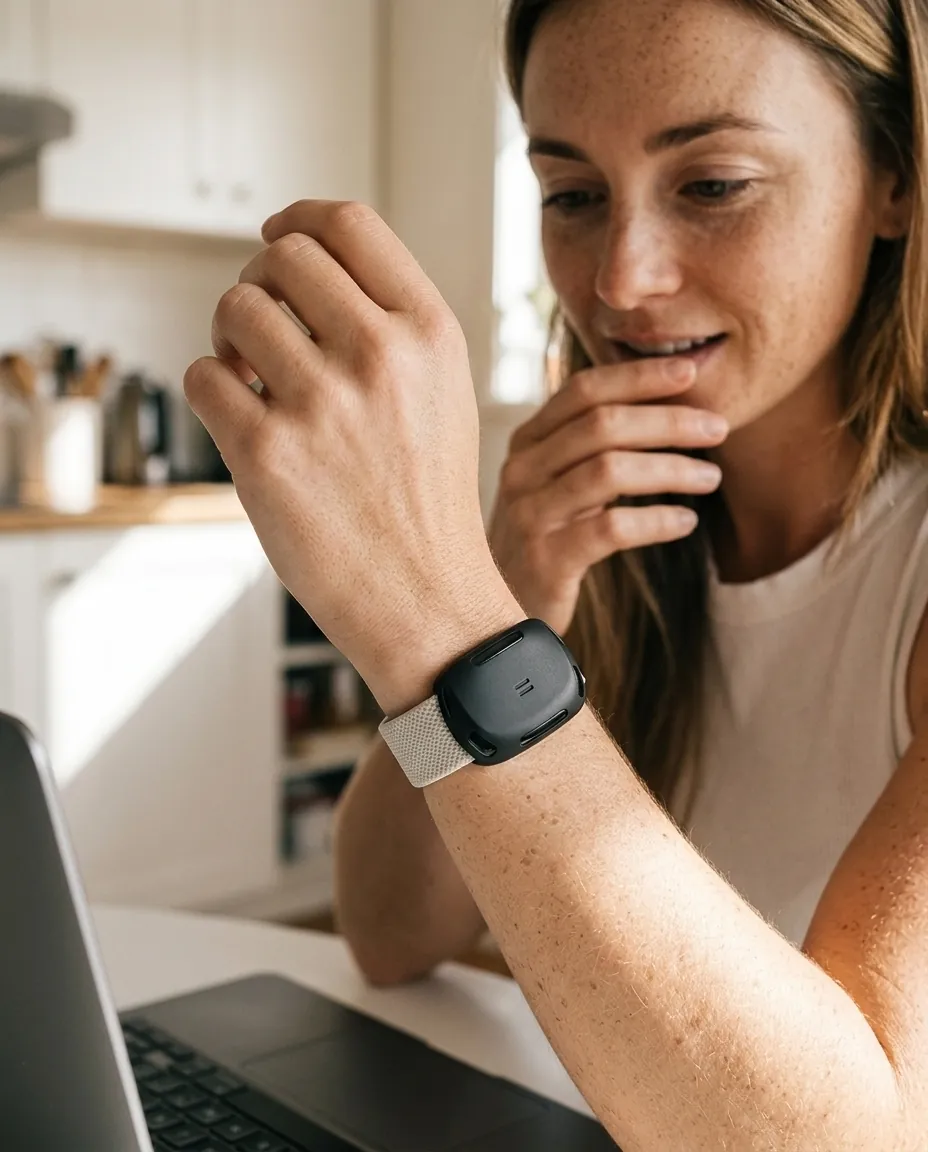
The signal only has to bring your attention back. Your hand does the rest. A firm double pulse, only you can feel it, and nothing to dread, so it stays on your wrist.
Sources
- Pavlok product pages, read November 2026.
- TLC Foundation for Body-Focused Repetitive Behaviors, Expert Consensus Treatment Guidelines, 2016.
- Leibinger et al., Frontiers in Psychology, 2023. A single case, which also cites the pilot.
- NCT05118633, clinicaltrials.gov. We found no published results as of November 2026.